
Video
Exclusive Interview, Hen Lotan Haviv with Gadi Sukenik on AI in Logistics
5 July 20255:03
A conversation on the potential of AI in logistics and field service, and how WEBLET helps companies do more with the same workforce.
Want to see how WEBLET works in the field?
Message us on WhatsApp and we will get back with clear answers.
Transcript
Hello everyone. Artificial intelligence is reshaping professions across every field, from writing and translation through marketing and sales to software development, for example. But the AI revolution is not felt only in high-tech companies or advertising agencies. Over the past year, new AI technologies have also been entering other industries. To talk about the potential of AI, for example in the world of logistics and service. Joining us is an expert in this matter, Hen Lotan Haviv. Hello.
Hello. CEO of WEBLET. First of all, what do you do?
We are a high-tech company that has been active for more than 40 years, and we specialize in digitizing companies that have field teams, salespeople, technicians, installers, drivers, who want to digitize them, manage their work, and plan their routes.
So you have worked for years in logistics and service, but now you are all in, completely committed to artificial intelligence.
This is a game changer. AI has changed the rules of the game. Everything that came before was older thinking, and it really changed everything and shows how you can do 30% more with the same workforce. Take us a little deeper into this. A company has been operating for years in its logistics area, it has systems, and then you come in and what do you do?
For example, we want to buy toilet paper, we go to the supermarket, the end consumer is already there, but there is a whole supply chain process behind that. There are drivers, they have trucks, each has characteristics and what they are allowed or not allowed to do in delivery. For example, there is a weight or volume limit for a truck. And companies need to decide for each driver whom they will visit. With the AI process, instead of each driver being able to visit, say, ten customers, they can visit thirteen, because the AI knows traffic, for example what is expected on the road, whether it is winter or summer, that is not the same, whether there will be disruptions, and so on. Even a very high quality human workforce cannot know these things. It can compare one driver to another, who completes a task faster versus another, and takes into account a huge number of attributes, and all the calculations of the different factors that help or hinder, and how to combine them.
I assume AI solves this in one stroke.
With one click it can take tens of thousands of tasks over a span of days and create optimal task planning for a field worker, taking into account traffic as well as the expected task duration based on many parameters, and as a result every worker will necessarily be able to complete many more tasks. That is truly a win win for companies.
Listen, for example, a company that has output, a company with 300 trucks for example, can fulfill a certain volume of orders before AI. After it integrates AI, it will necessarily be able to deliver the same goods with between 10% and 30% fewer trucks. And still I assume companies, also those listening to us and hesitating, ask themselves whether it is worth it or not. What are the biggest challenges you face at WEBLET?
It requires innovative thinking, because before there was a process where they took the country and divided it into regions, all the capacity belonged to a region, every technician or driver had their zone and ran their tasks accordingly, and suddenly AI says no: I am sending two drivers to Rishon and then both go to Tel Aviv. It looks at everything, where each person starts, where each worker finishes, their working hours, their skills, many parameters, and produces results that any later human touch will necessarily hurt. Meaning you need to think differently and really understand that something different and new is here.
And where does Israel stand in this field?
If so, I have to say, regarding your potential, we have already implemented this with dozens of customers over the past year, who can currently deliver the same goods with less workforce. And I am sure that in a short time, anyone who does not adopt AI in these areas in their company will be left behind.
That involves birth pains that are not simple for companies, I assume.
AI is a machine that learns, but at the beginning it needs accurate data, and that is the challenge for companies. To reach the results we are talking about, they may now need to invest in preparing a data foundation the AI can work with, but afterward the sky is the limit. And there is a very fast ROI here: if they really prepare the data foundation, companies can reach ROI in just a few months. Implementation is also fast, by the way, and ROI is very fast.
Artificial intelligence in logistics and service, also in logistics and service, WEBLET. Hen Lotan Haviv, thank you very much.
More videos
 1:30
1:301:30
WEBLET Integration Engine: ERP & CRM
How much time does your team spend on double data entry between ERP, CRM, and a separate distribution system? WEBLET connects directly to your existing systems.
Watch video 0:51
0:510:51
Smart Technician Scheduling with WEBLET and AI
Do you manage a team of technicians or service personnel? Delays and incorrect parts are costing you dearly. Accurate scheduling starts with WEBLET and AI.
Watch video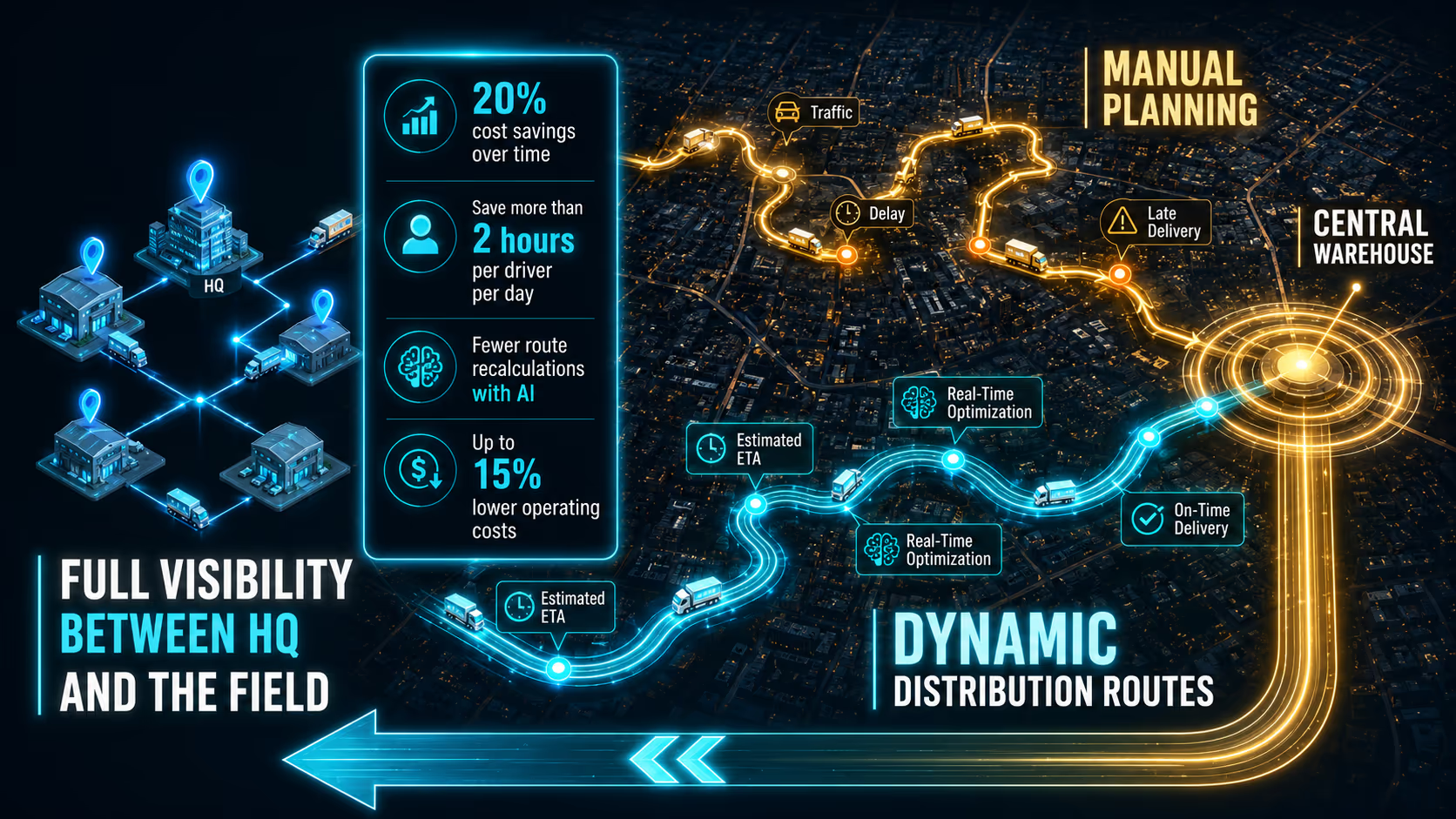 1:02
1:021:02
AI Powered Distribution Route Planning: Why Manual Planning Falls Short
Manual distribution route planning can no longer keep up with traffic, order changes and real time updates. AI changes the rules of the game.
Watch videoInterested in logistics management with AI?
WEBLET – end-to-end app for field and business operations, in real time.
Contact Us - No Obligation