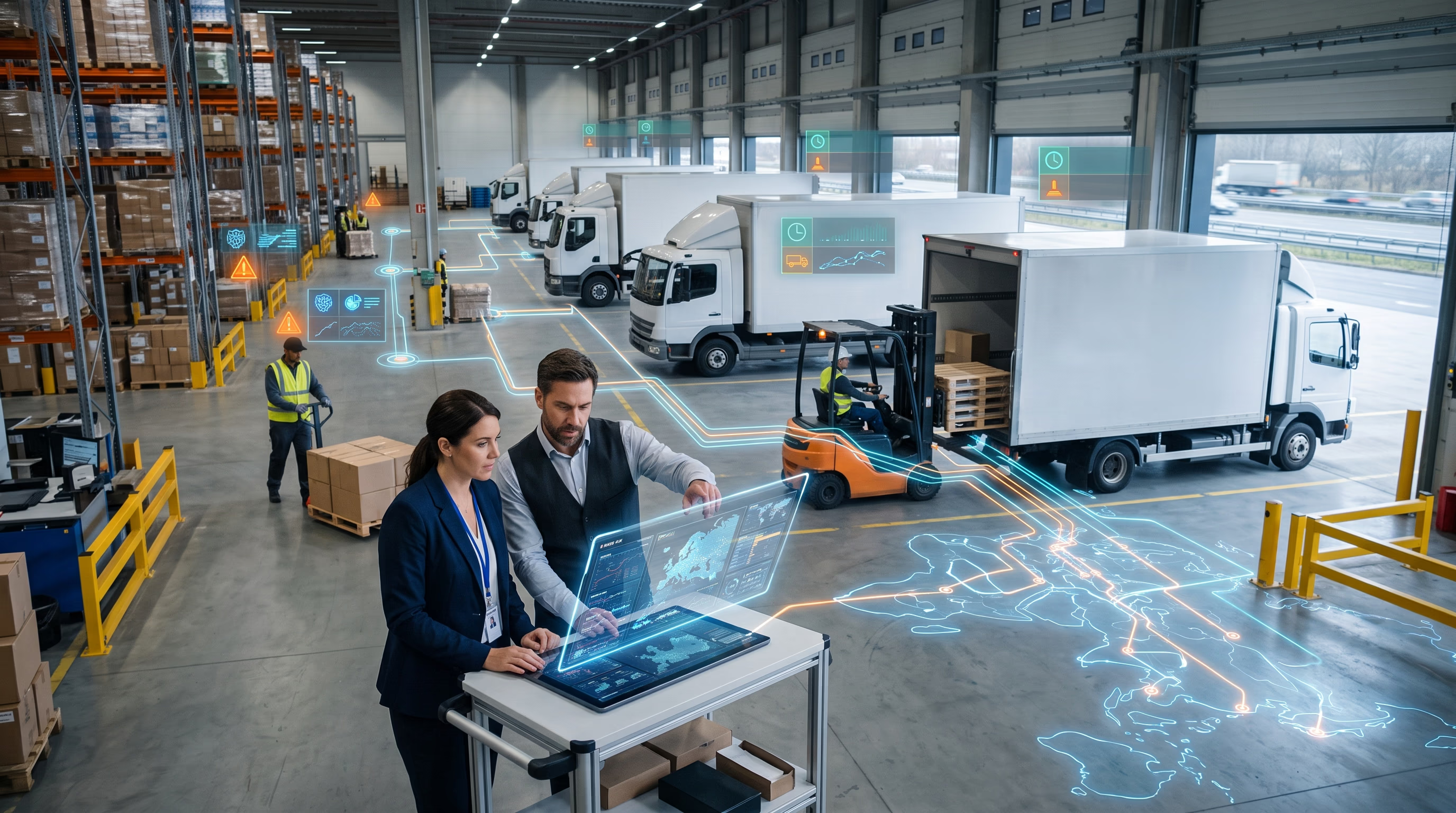
The Core Challenge: When Reality Differs from the Plan
A distribution plan that looks efficient at the beginning of the day does not guarantee that execution will follow the same course. Orders change, customer waiting times vary, traffic congestion affects arrival times, and different unloading locations impose constraints that are not always reflected in the original plan.
In many organizations, managing these gaps relies heavily on the personal knowledge of operations managers. They know which customers tend to cause unloading delays, where access restrictions exist, and which delivery routes require special attention.
However, when this knowledge is neither documented nor analyzed, the organization struggles to apply it systematically. As distribution operations expand, dependence on decisions based on memory and personal experience increases, creating both operational and business risks.
What Changes in the Operational Approach
The transition to data-driven management goes beyond replacing Excel spreadsheets with a digital system. The meaningful change lies in the ability to identify relationships between events, learn from actual performance, and use those insights to improve future planning.
A navigation system focuses on selecting the route. Smart operations management considers a much broader picture, including service times, vehicle capacity, delivery windows, workloads, customer commitments, and costs.
Instead of assuming that what worked yesterday will work tomorrow, organizations can analyze historical data and examine how recurring patterns influence future planning.
Technology and Practical Implementation in the Field
One of the most important elements is connecting business information stored in ERP systems with execution data collected in the field.
The order management system knows what the customer ordered and what needs to be delivered. Field data completes the picture through arrival times, stop durations, delivery route performance, and deviations from the original plan.
When this information is integrated and analyzed, organizations can identify customers whose service times are longer than planned, areas where recurring delays develop, and delivery routes where resources are not allocated efficiently.
AI and machine learning make it possible to extract insights from this data that are difficult to identify through manual monitoring alone. The crucial step is turning those insights into action: improving delivery windows, adjusting route plans, and highlighting exceptions that require management decisions.
Managing operations and distribution?
Leave us a WhatsApp message and we'll get back to you with an initial fit check.
The Business Impact: From Routine Monitoring to Exception-Based Management
When managers are required to monitor every activity and every change, a significant portion of their time is devoted to handling routine events.
Exception-based management (Management by Exception) changes these priorities. Instead of presenting all available information, the system directs attention to events with operational or business significance.
This enables managers to focus on exceptions that may affect SLA commitments, distribution costs, resource availability, or customer service levels.
The financial implications are clear: prolonged waiting times, unnecessary trips, delays, and inefficient resource utilization increase distribution costs and may negatively affect service quality. Improving data quality and decision-making enables organizations to address these cost drivers in a more measurable and systematic way.
The Bottom Line
The most important contribution of AI to operations and distribution management is not replacing experienced managers, but strengthening their ability to make decisions based on a broader and more accurate operational picture.
Professional knowledge remains essential. However, instead of relying primarily on personal experience and intuition, managers can combine that expertise with data from enterprise systems and field operations.
This creates a foundation for management that identifies patterns, focuses on exceptions, and improves the quality of decisions.
The real advantage is not that the system knows more than the manager, but that it enables the manager to see more, see it earlier, and make better decisions.
Further reading: ה-AI לא מחליפה את מנהל התפעול, היא מחליפה את הניחושים (original article in Hebrew by Irit Lotan, published on People & Computers).