Why the service organization has become a strategic topic for finance leadership
Until a few years ago, many service companies competed mainly on product or equipment quality. Today, in most sectors those gaps have narrowed materially.
What differentiates organizations now is service quality, response speed, the ability to meet commitments, and real-time operational control.
Technicians and field service professionals are on the front lines of the company. They represent the brand with the customer, directly affect satisfaction, and often create opportunities for upsells, service expansion, and stronger loyalty.
As a result, organizational leaders increasingly see the service organization not only as a cost center, but as a meaningful profit engine.
How SaaS technology is reshaping field operations management
Moving to advanced SaaS platforms lets organizations run field activity in a more continuous, controlled, and flexible way.
Instead of manual workflows, partial reporting, or legacy systems, teams can manage technicians, tasks, tickets, inventory, customers, and fleet assets from one platform connected in real time.
Leading systems typically support:
- Real-time task planning and management
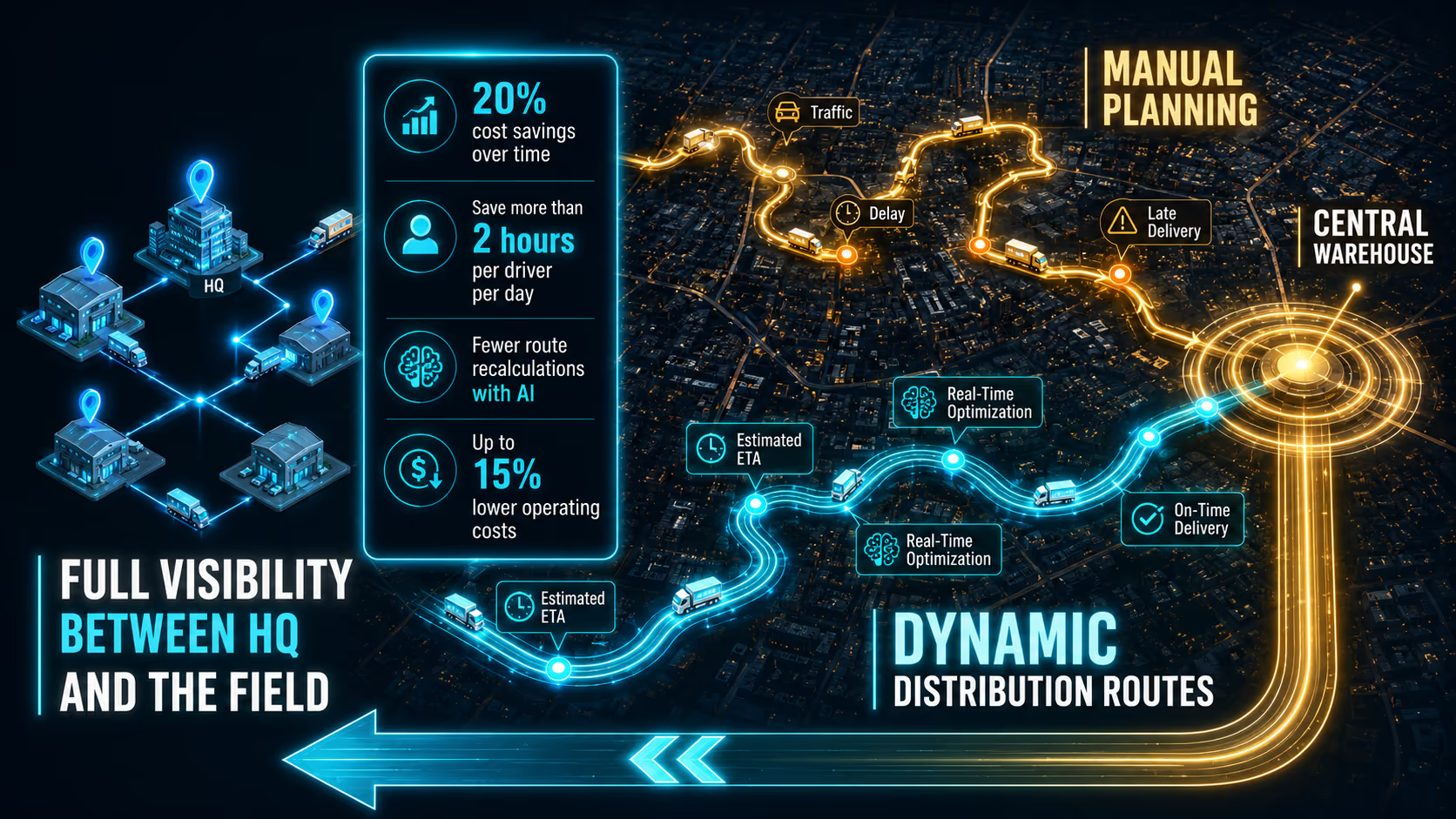
- Smart route optimization
- Real-time visibility into field team activity
- Inventory and spare parts management
- Complete digital documentation from the field
- Operational reporting and controls
- Offline-capable work without full reliance on connectivity
In addition, integrating smart self-scheduling allows customers to book service visits independently based on real availability, reducing call-center load and improving customer experience.
For decision-makers across the organization, the implication is clear: stronger spend control, better resource utilization, and a sharp reduction in operational waste.
How optimization and artificial intelligence affect profitability
One of the biggest challenges for service companies is managing time and resources efficiently.
Unnecessary travel, poor planning, incorrect technician assignment, or repeat visits for the same fault all drive up costs and hurt margins.
Advanced platforms combine optimization engines and AI to:
- Reduce drive time
- Improve work sequencing
- Shorten response times
- Lower operational load and disruption
- Improve first-visit success rates
- Manage exceptions in real time
In practice, organizations often complete more tasks with the same headcount, sometimes without adding staff at all.
Why real-time data visibility matters so much right now
During economic uncertainty, market swings, and rapid demand shifts, the ability to decide in real time becomes critical.
Finance leaders cannot afford to rely on partial or delayed information.
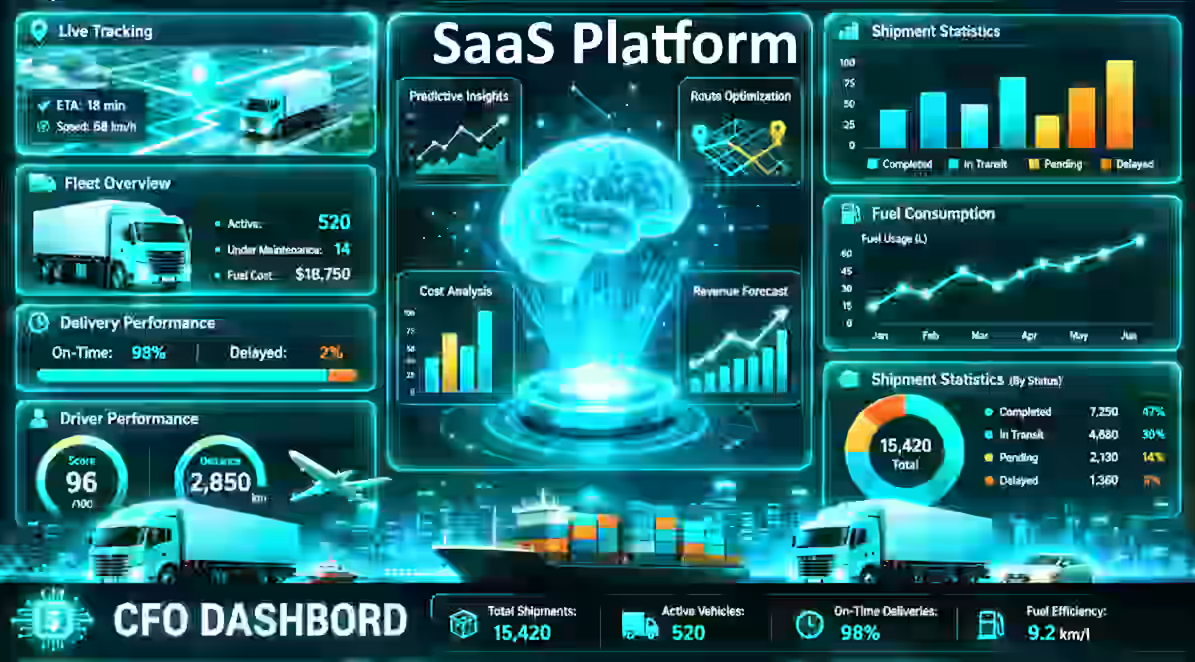
When all field activity feeds one central platform, leadership gains a full picture of:
- Workloads
- Resolution times
- Vehicle and crew utilization
- Operational exceptions
- Employee performance
- SLA compliance
- Ticket and task status
- Billing and customer documentation data
That visibility enables faster reactions, sharper decisions, and steadier operations even in difficult periods.
How Field Technology Improves Customer Experience
Customers today expect transparency, availability, and fast responses.
When a technician arrives with full customer history, technical context, inventory insight, and prior documentation, service quality rises sharply.
That enables:
- Faster fault resolution
- Better communication with the customer
- Fewer repeat visits
- Higher trust
- A stronger brand perception
In many cases, service quality is the decisive factor in whether a customer stays with the company long term.
More than 10 field agents?
Leave us a WhatsApp message and we'll get back to you with an initial fit check.
From reactive management to planned, data-driven operations
Many organizations still operate reactively, responding to faults, overload, and issues only after they occur.
Advanced SaaS platforms enable proactive, data-driven management.
Through continuous monitoring, smart reporting, optimization, and AI, teams can spot bottlenecks early, streamline processes, and improve performance on an ongoing basis.
For CFOs, this is a strategic shift that directly affects:
- Profitability
- Operational efficiency
- Customer satisfaction
- Business resilience
- Future growth capacity
How WEBLET Fits Into the Bigger Picture
The transition to advanced SaaS platforms for field operations management, such as WEBLET, has become a business and operational necessity for organizations seeking to improve control, efficiency, and profitability.
Today's business environment requires organizations to operate with greater precision, efficiency, and flexibility than ever before.
CFOs aiming to improve profitability, reduce operational costs, and strengthen organizational stability can no longer ignore the direct impact that field operations management has on overall business performance.
Advanced SaaS platforms for managing field teams, technicians, and service operations enable organizations to integrate optimization, artificial intelligence, real-time visibility, and digital workflows as an integral part of their business strategy.
WEBLET delivers an advanced platform for field operations, technicians, service, tasks, and distribution, with optimization and AI, full mobile readiness, and work from anywhere, anytime.