What Is B2B eCommerce?
B2B eCommerce is electronic commerce between businesses, where business customers place orders, check inventory, view personalized price lists, and manage operational or financial information through a secure digital system.
Unlike a regular online store for individual consumers, a B2B commerce site is designed for more complex business processes. A business customer usually does not purchase a single product through a simple process. They may work with a special price list, credit terms, commercial discounts, recurring orders, allocated inventory, credit limits, open invoices, delivery coordination, and historical data.
Therefore, a high-quality B2B commerce site needs to offer much more than product selection and adding items to a cart. It needs to reflect the business relationship between the supplier and the customer.
Why Has B2B eCommerce Become Such a Central Topic?
The main reason is the change in business customer expectations. B2B customers have also become accustomed to digital availability, self-service, information transparency, and the ability to perform actions without waiting for a phone call, email, fax, or a field sales agent visit.
A business customer wants to know what is available in inventory, what their price is, what their account status is, which orders they have placed in the past, when delivery is expected, and whether they can open a service request or perform another action independently.
For the supplier, the advantage is not only a better customer experience. A B2B commerce portal can reduce operational workload, minimize repeated calls and inquiries, enable 24/7 order intake, improve order accuracy, and connect the business customer directly to the organization's workflows.
The Difference Between a Sales Website and a Digital Business Process
One of the important differences between consumer eCommerce and B2B eCommerce is that in B2B, the website is not just a storefront.
In a business organization, a digital order can affect an entire chain of actions: inventory check, customer terms approval, order creation in the ERP system, delivery coordination, account update, customer service, distribution, collection, and management reports.
Therefore, the important question is not only whether there is a website. The question is whether the website is connected to the business processes behind it.
When a B2B portal is disconnected from the organization's systems, it can become yet another channel that needs to be maintained manually. When it is properly connected, it becomes part of a broader operational system.
What Does a Business Customer Expect to See in a B2B Commerce Site?
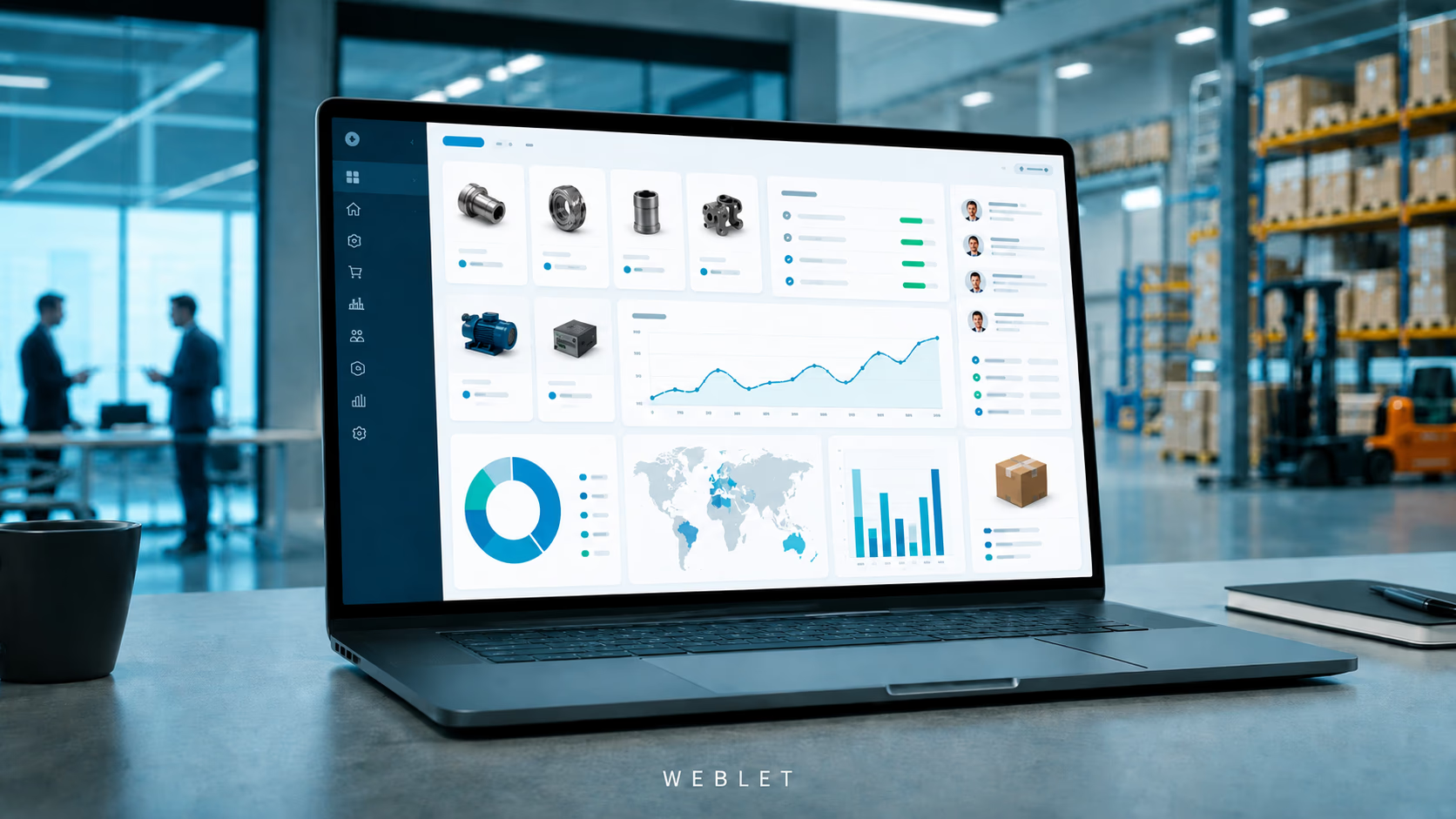
A business customer expects to receive information that is tailored to them, not only general information. Among other things, a B2B commerce site can display personalized price lists and customer-specific discounts, inventory availability, order history, recurring orders, account status, credit exposure, accounting card, delivery times, service information, open service requests, visit coordination, historical data, and order forecasts.
This means that the portal becomes a self-service tool. The customer does not have to wait for a sales agent, service center, or sales representative to receive basic information or place an order.
Where Does WEBLET Fit In?
WEBLET sees B2B eCommerce as part of a broader business and operational ecosystem. WEBLET's Virtual Agent module enables suppliers to provide their business customers with a secure B2B commerce site, where each customer sees the information relevant to them: order history, account status, price lists, discounts, inventory availability, and additional information according to the organization's needs.
Business customers can place orders from anywhere and at any time, and the orders can flow directly into the ERP system, in the same format as orders received from field sales agents. This makes it possible to expand the ordering process into an additional digital channel, without necessarily changing the existing business processes.
The advantage is not only technological. It is an operational change: less dependence on phone calls, fewer repeated inquiries, less manual work, greater availability for customers, and more control over information.
B2B eCommerce, Service, and Operations, Not Just Sales
In many organizations, a B2B portal is not used only for product orders. It can also support opening service requests, displaying visit or installation schedules, checking delivery times, viewing financial and logistics information, and making data accessible in a way that reduces the workload on service and operations departments.
In addition, the portal can be extended to self-scheduled appointments based on real availability, so customers can independently book service visits without increasing call-center load.
This is an important point: business eCommerce does not end with the "submit order" button. It continues into the warehouse, service, accounting, operations, distribution, and control.
The better the systems are connected, the more the organization can provide its business customers with a more accurate, available, and transparent service experience.
More than 10 field agents?
Leave us a WhatsApp message and we'll get back to you with an initial fit check.
Where Does AI Fit In?
Artificial intelligence does not replace the business foundation of B2B eCommerce, but it can improve it when there is structured data and clear digital processes.
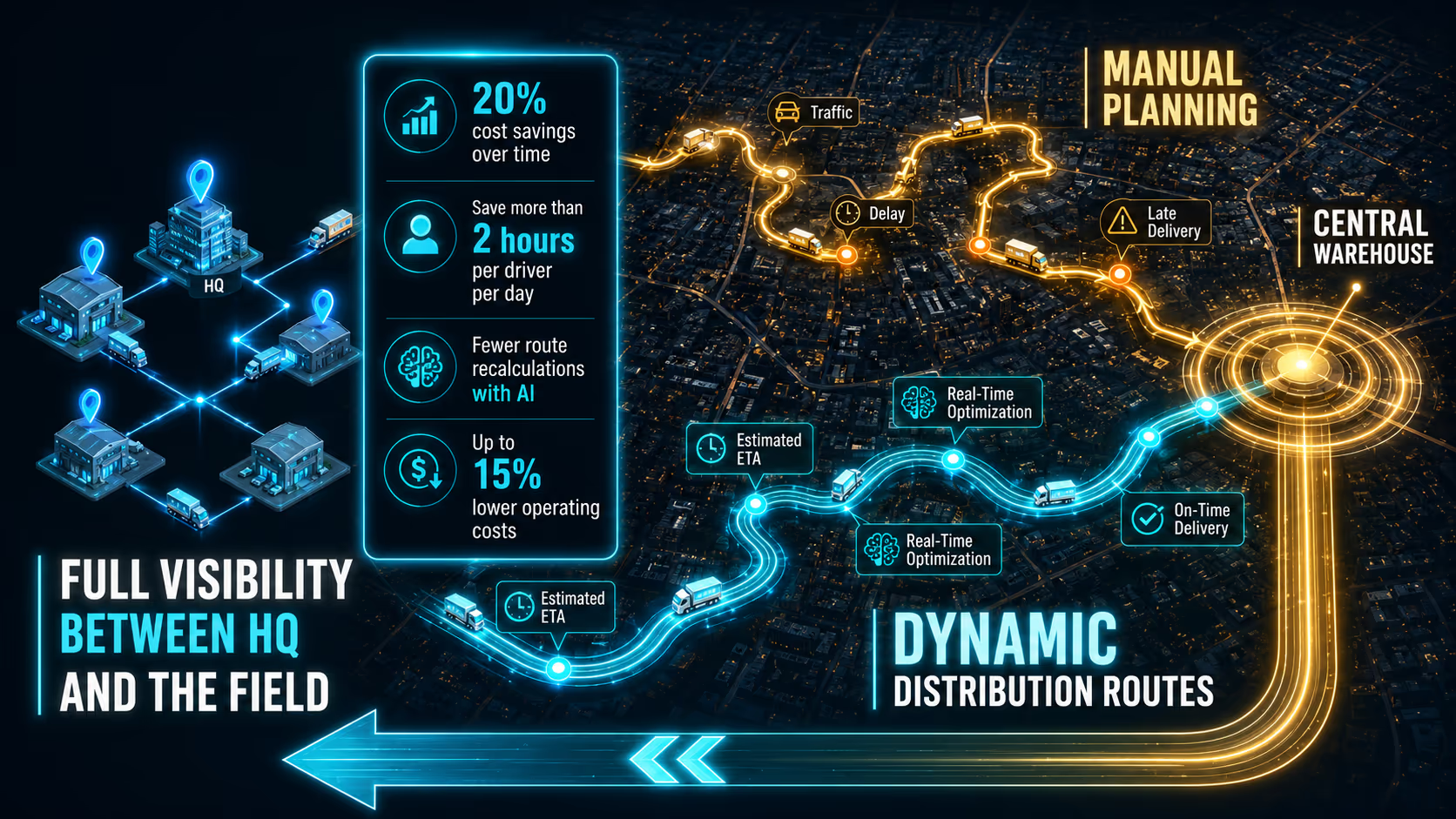
In advanced systems, AI and optimization can help analyze ordering patterns, identify anomalies, recommend recurring orders, improve operational planning, forecast workload, and improve service and supply processes.
But it is important to understand: effective AI relies on reliable information. When orders, inventory, customers, price lists, and field operations are managed in a connected digital way, it becomes easier to generate real business value from them.
Summary
B2B eCommerce is much more than a sales website. It is a digital infrastructure that enables business-to-business trade to operate in a more available, transparent, secure, and connected way.
For suppliers, distributors, manufacturers, and organizations with business customers, a B2B commerce site can become a significant channel for receiving orders, improving service, reducing operational workload, and making business information accessible in real time.
The future of eCommerce does not belong only to individual consumers. It also belongs to the business world, and in the business world, success is not measured only by having a good-looking website, but by the ability to connect the digital order to the processes behind it: ERP, inventory, service, operations, supply, and control.