What Exactly is the Last Mile?
The last mile is the stage where goods leave the final distribution point and reach their destination. In the B2B world, it is not about delivery to a private home, but about supplying businesses, institutions, service points, warehouses, branches, or other corporate customers.
Precisely because this is the final stage, any deviation is immediately felt. Delays, incorrect delivery order, overload on a specific driver, unbalanced distribution between routes, or inability to respond to changes in real-time — all translate into higher costs, less stable delivery times, and damage to service levels.
Why is B2B Last Mile So Challenging?
Managing distribution at this stage requires simultaneous handling of multiple variables: numerous business delivery points, time windows, priorities, traffic loads, driver availability, vehicle capacity, delivery documentation, and ongoing control.
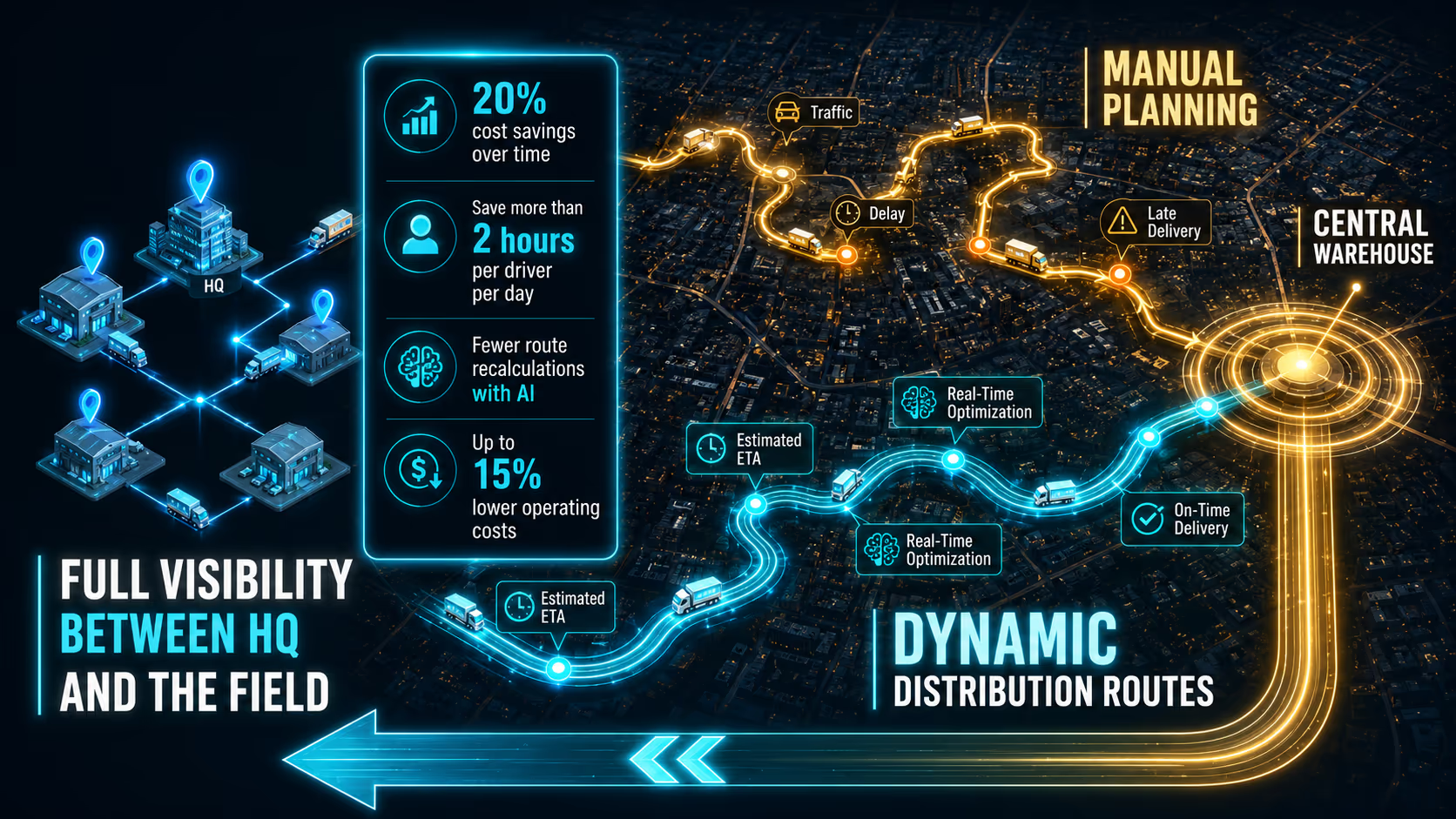
When planning is done manually, or with partial tools that don't see the full picture, a gap forms between what was planned in the office and what actually happens in the field.
The result isn't just operational inefficiency. Often there's also managerial burnout: more phone calls, more exceptions, more manual handling, and less control.
This is Where TMS Comes Into B2B Distribution
A TMS system is a transportation and distribution management system designed to centralize, manage, and improve shipping and route operations for organizations. In the context of B2B last mile, this means transitioning from reactive management to planned, controlled, data-driven management.
When the system incorporates optimization and artificial intelligence, it doesn't just "display" the situation, but helps build better planning from the start: which vehicle will handle which route, the correct order to reach each point, how to meet constraints, and how to reduce unnecessary trips, waiting times, and exceptions.
B2B Last Mile as a Planning Challenge, Not Just Driving
One common mistake is treating distribution problems as if they only arise "on the road." In practice, many of them start earlier: in non-optimal planning, lack of clear priorities, inaccurate task allocation, and lack of synchronization between office and field.
Therefore, real improvement of B2B last mile isn't just about better navigation. It requires a systemic view: planning, scheduling, control, tracking, documentation, and the ability to respond in real time.
How WEBLET Fits Into This Picture
WEBLET presents a flexible platform for management, planning, optimization, and control of organizational distribution and supply chain processes, with TMS based on optimization and artificial intelligence.
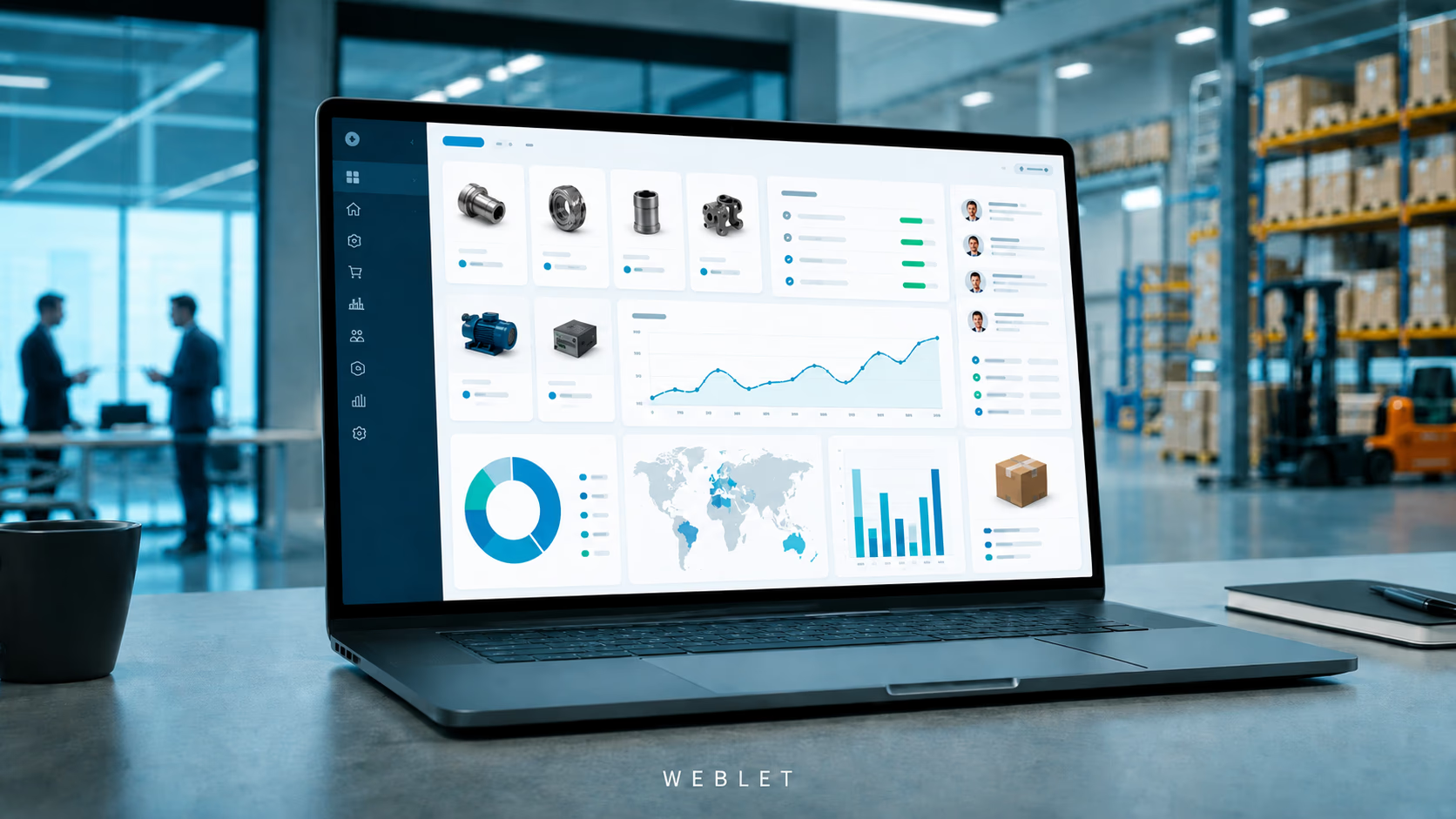
The system supports route planning, delivery documentation, execution tracking, status monitoring, management control, and operational dashboards.
WEBLET also supports distribution operations carried out by subcontractors and independent drivers, not only by the organization's own employed drivers. The platform enables control, tracking, and management of subcontractor activity and the drivers operating on their behalf, including support for complex settlement processes based on multiple variable parameters.
In simple terms, this means that the distribution network doesn't have to rely solely on accumulated experience, improvisation, or manual tracking. It can be managed more precisely, see a broader picture, and systematically improve performance.
What Does an Organization Gain from Proper B2B Last Mile Management?
When B2B last mile is well managed, the benefit isn't just shorter routes. The improvement touches the heart of operations:
- More efficient planning of routes and work schedules
- Improved utilization of drivers and vehicles
- Reduction of unnecessary trips and operating costs
- Better control over actual execution
- Higher-level documentation and tracking capability
- Stable, accurate, and transparent service for business customers
More than 10 field agents?
Leave us a WhatsApp message and we'll get back to you with an initial fit check.
Not Just Technology, But Operational Advantage for B2B Organizations
In the B2B world, where service level, accuracy, and efficiency directly impact profitability and relationships with business customers, the last mile is no longer a marginal question. This is a critical area where organizations may lose money, time, and trust, or alternatively create real operational advantage.
Therefore, the discussion about Last Mile TMS isn't just technological. It's managerial. Organizations seeking to improve their distribution network need tools that enable them to plan better, respond faster, and connect office decision-making with what actually happens in the field.
Summary
B2B last mile is much more than the final stage of transportation. It's the practical test of the entire distribution network. That's where planning quality is revealed, where gaps are felt, and where the difference is made between reasonable operation and efficient, accurate, more profitable operation.
When managing this stage with an advanced platform like WEBLET, combining TMS, optimization, and artificial intelligence, you can turn distribution complexity into a more controlled, measurable, and smarter process.
For organizations supplying goods to business customers, this isn't just operational improvement — it's a move that can directly impact service, efficiency, and the ability to grow properly.