Logistics - Guide

POD — From Simple Delivery Management to Full Distribution Control

What is POD (Proof of Delivery) and why are more companies moving to digital delivery management?

10 August 2025Weblet Team7 min read
POD guide — Proof of Delivery, distribution management, and logistics with WEBLET
Key takeaways

End-to-end distribution management

Real-time digital delivery confirmation

Smart route optimization

Driver and field task management

Mobile app for drivers

Full customer transparency

What is POD and why has it become a key tool in distribution?

In the world of distribution and logistics, the delivery process no longer ends when the driver arrives at the customer. Organizations today are required to manage a complex delivery system that includes route planning, operational control, delivery documentation, driver tracking, exception handling, and full transparency with customers.

As distribution systems become more dynamic and faster, the need for POD (Proof of Delivery) systems that enable managing the delivery process in a digital, controlled, and more efficient way increases.

Proof of Delivery is a digital confirmation that delivery was actually made. But in practice, modern POD systems have become much more than a simple delivery confirmation.

For distribution, wholesale, logistics, and field operations companies, it's a system that helps create a digital workflow throughout the entire distribution process — from the warehouse to delivery at the customer.

Challenges distribution managers face daily

Modern distribution systems include dozens and sometimes hundreds of deliveries per day. In such reality, even small errors can quickly turn into a significant operational problem.

Among the common challenges: • Lack of transparency on delivery status • Delays in distribution times • Information gaps between drivers and control center • Loading or unloading errors • Missing documents • Difficulty tracking exceptions • Lengthy manual handling of documents and delivery confirmations

When information doesn't flow in real-time, it's difficult to manage distribution efficiently and make quick decisions during the workday.

Transitioning from manual distribution to digital delivery management

One of the major changes in the logistics world in recent years is the transition from manual processes to digital distribution management.

Instead of relying on paperwork, phone calls, and manual documentation, many companies are moving to systems that enable: • Real-time delivery tracking • Digital documentation of deliveries • Control over distribution routes • Field task management • Quick communication with drivers • Viewing delivery status throughout the day

The transition to digital management helps reduce errors, shorten handling times, and improve the ability to control the distribution system.

Why have control and monitoring become a strategic issue?

For many organizations, the distribution system directly affects service level, customer satisfaction, and operating costs.

When there's no full control over field activity, the organization struggles to: • Understand what's happening in real-time • Quickly handle problems • Manage exceptions • Provide accurate information to customers • Monitor distribution performance

POD systems provide an additional layer of transparency to logistics activity and allow managers to get an updated status picture throughout the workday.

How does optimization help improve distribution efficiency?

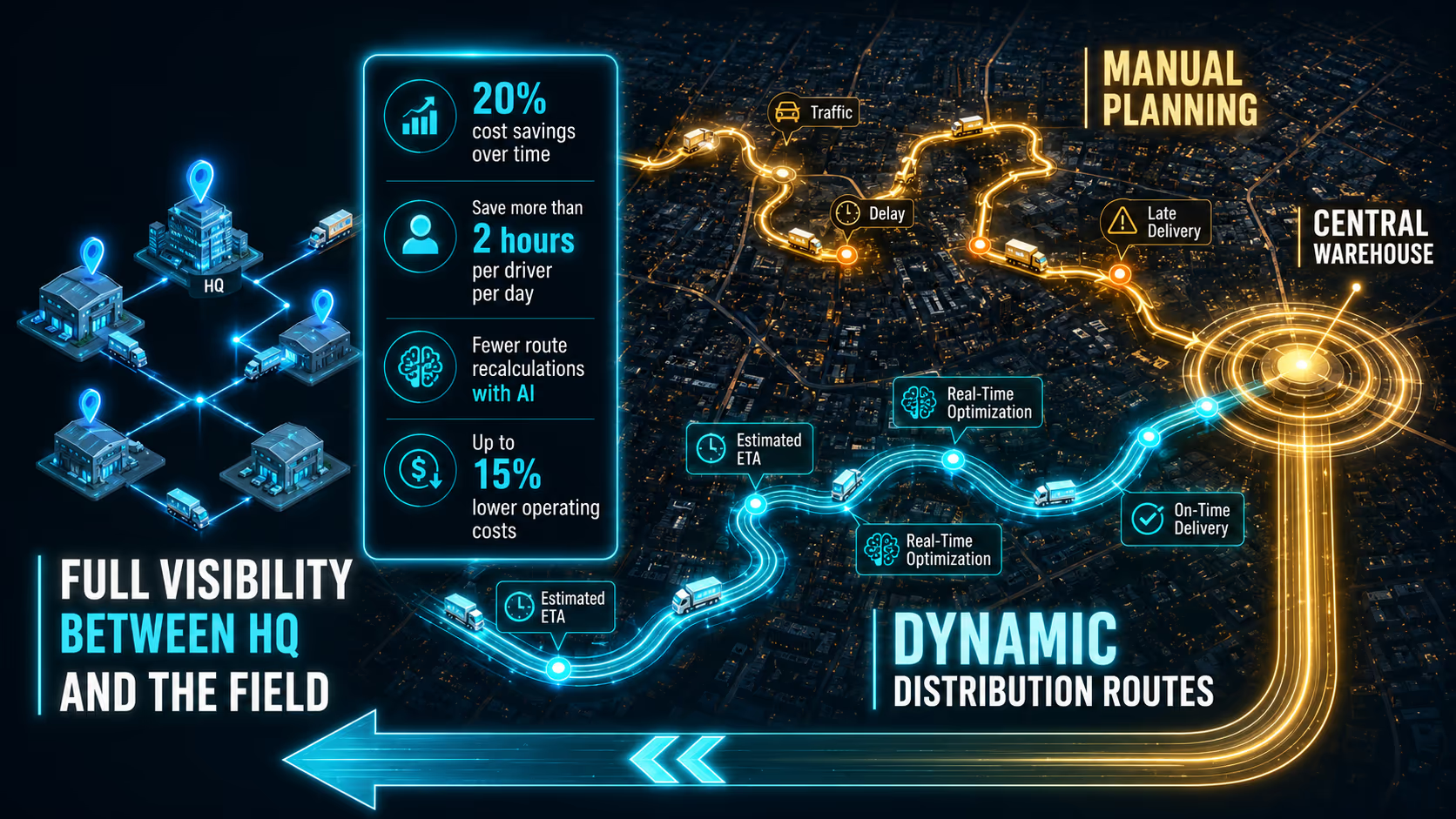
One of the areas that has developed significantly in recent years is route optimization.

Instead of managing distribution routes statically, advanced systems allow planning the order of deliveries more intelligently according to distances, loads, delivery times, and field conditions.

The goal is not just to save kilometers, but also to: • Improve driver and vehicle utilization • Reduce waiting times • Lower operating costs • Improve meeting delivery times • Optimize the entire distribution process

For companies performing extensive distribution activity, this is an improvement with operational and economic significance.

Enhanced customer transparency

Customers today expect to receive clearer and more accurate information about their delivery.

Therefore, more and more companies are implementing digital distribution processes that enable: • Status updates • Pre-arrival notifications • Full delivery documentation • Estimated arrival times • Faster exception handling

Higher transparency improves not only the customer experience but also reduces the load on service and operations centers.

Where does WEBLET come into the picture?

WEBLET provides a distribution management and POD platform that enables organizations to manage the delivery process digitally — from route planning and loading goods, through driver and field task management, to delivery documentation and real-time control.

A combination of optimization, field activity, and real-time reporting helps organizations improve efficiency, transparency, and control in the distribution system.

POD as part of a smart logistics system

Today, POD systems don't operate as a separate system but as part of a broader system of distribution management, logistics, and field operations.

When the distribution system is connected to other systems in the organization — such as ERP, customer service, warehouse, and operations — it's possible to create a continuous, accurate, and more controlled workflow.

For many organizations, this is a significant step towards full digitization of distribution activity.

Summary

Proof of Delivery is no longer just a delivery confirmation.

For distribution and logistics companies, it's a key tool for improving control, efficiency, and transparency throughout the entire distribution process.

As organizations are required to manage more deliveries, more drivers, and more real-time information — the need for systems that enable managing distribution activity in a smarter, more digital, and more connected way grows.

Recent Articles

Why CFOs Need a SaaS Platform for Field Team Management - WEBLET
10 May 2026

Why CFOs Need a SaaS Platform for Field Team Management

How SaaS platforms for managing technicians and field teams help CFOs improve profitability, reduce costs, and streamline service operations through optimization and artificial intelligence.

Irit Lotan, Content Manager, WEBLETRead More
The Last Mile with WEBLET App- The Ultimate Test of Your Distribution Network - WEBLET
10 February 2026

The Last Mile with WEBLET App- The Ultimate Test of Your Distribution Network

Read about the importance of the last mile — the final stage in distribution, where goods move from the last distribution point to the business customer, how proper management affects service, efficiency, and operational control, and how WEBLET helps manage it more intelligently and accurately.

Irit Lotan, Content Manager, WEBLETRead More
Comprehensive Guide to Choosing an AI Logistics Platform for Distribution, Transport & Route Optimization - WEBLET
1 February 2026

Comprehensive Guide to Choosing an AI Logistics Platform for Distribution, Transport & Route Optimization

A comprehensive guide to improving logistics processes with AI. Practical strategies for higher efficiency, cost savings and business resilience with WEBLET optimization platform.

Hen Lotan Haviv, CEO of WEBLETRead More

Want to upgrade your distribution system?

Contact our team and discover how WEBLET can help you manage distribution more intelligently.