Why CFOs Need a SaaS Platform for Field Team Management
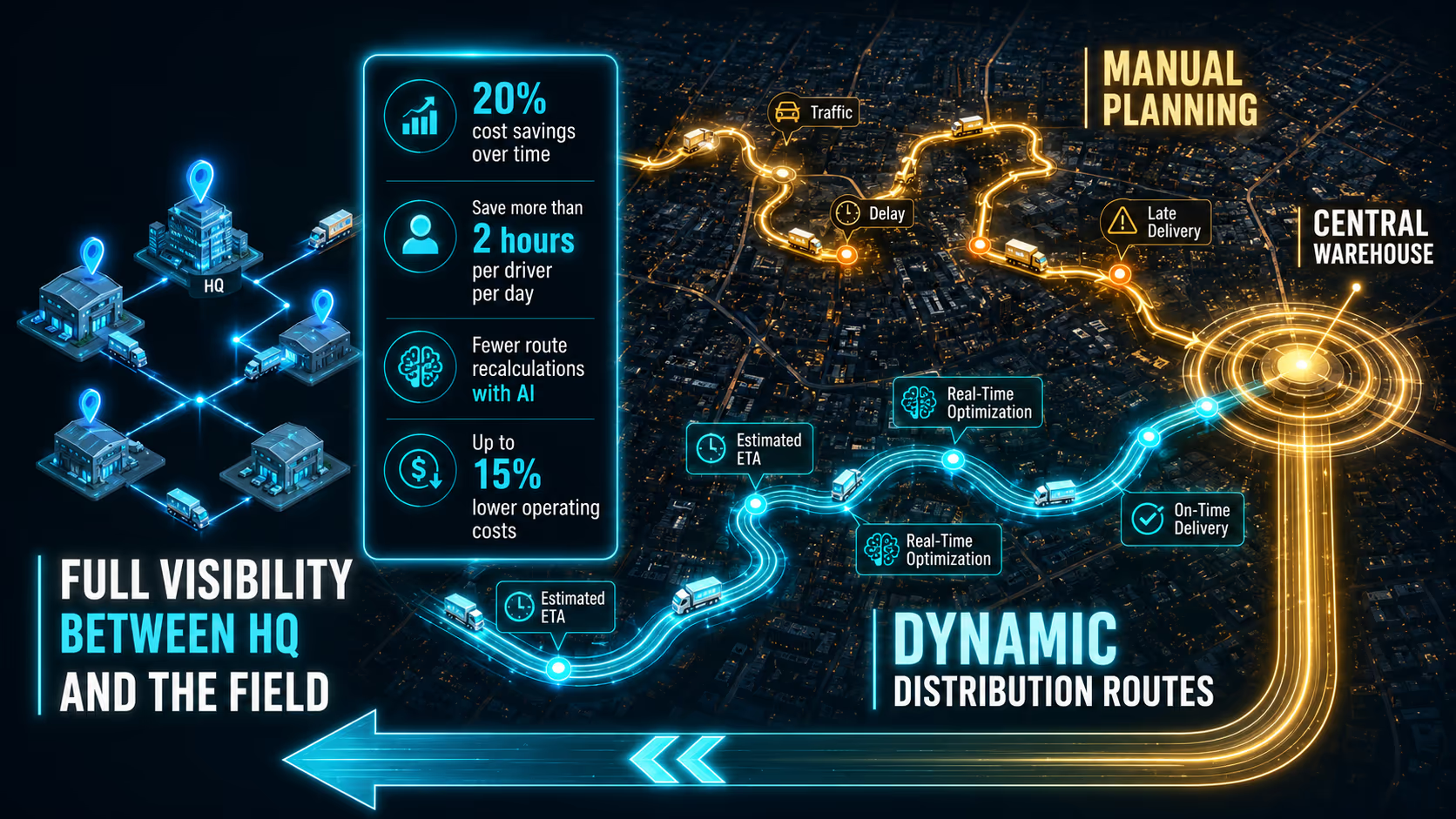
How SaaS platforms for managing technicians and field teams help CFOs improve profitability, reduce costs, and streamline service operations through optimization and artificial intelligence.
Is field service software worth $1.35 billion? An in-depth analysis of the major FSM deal

Recently, we learned that software giant Salesforce acquired ClickSoftware, a company specializing in field service management, for a staggering $1.35 billion. This field, also known as Field Service Management, is very familiar to us. We specialize in this area, as our WEBLET software competes with and complements ClickSoftware.
Companies operating in this sector (like all our customers) typically send technicians and field agents to locations far from the office to provide installation, repair, maintenance, sales, or any other service performed at the customer's premises. Managing field workers requires advanced operational tools. These field work management software solutions are designed not only for technicians but also for drivers, sales agents, leasing companies (transport), distributors, installers, inspectors, surveyors, doctors, work scheduling, time attendance, etc.
ClickSoftware (the acquired company) has "smart" Mobile applications that enable companies to streamline and improve their technician and service operations based on availability, skills, mobility, and location. Thanks to such an optimization algorithm, large companies can efficiently assign hundreds and thousands of technicians to their tasks while meeting required SLAs and improving customer service.
These Mobile applications belong to an emerging field in software called Field Service Management - FSM. This article will not analyze the deal from an economic perspective but will emphasize the business benefits of the acquisition and the potential inherent in the field.
In recent years, we have witnessed a trend of organizations transitioning to digital, both globally and locally. Field worker computerization is flourishing through various business applications using mobile devices. Such a digital transition is enabled, among other things, thanks to full connectivity between central organizational systems like ERP and CRM and modern Mobile applications for field workers.
Organizations want to become more efficient and benefit from new available technologies in both B2B and B2C sectors. No more manual form filling, no more delays in delivering information to management, no more critical inventory shortages, and no more delays in reaching customers – everything is done via Mobile here and now with full and immediate integration with all active software in the organization and full availability of all stakeholders.
Salesforce's growth strategy based on synergies with the acquired company probably drove it to pay this enormous sum for the acquisition.
Such Field Service Management (FSM) systems include not only service operations but also the entire supply chain. The field continues to develop thanks to the parallel development of modern business Mobile application technology.
These are no longer dependent on operating systems. They can run on all modern devices (CrossPlatform) and are hardware-independent, meaning they are Device Agnostic. They work both Online and Offline and no longer require downloads from Apple or Google stores.
The scope of companies operating in the FSM field seeking to streamline through Mobile applications is very broad. These include service and inspection companies, B2B sales companies, as well as B2B2C, distribution companies, automotive companies: importers, leasing and rental, transportation and logistics companies, medical organizations providing field service, B2C service companies, and more.
The benefit to these companies comes from a wide range of modules in modern mobile applications, as well as those available in the modules of the WEBLET platform:
Each module can include: photo album catalog, GPS location services, work scheduling, field printing, employee assignment, and more.
Modern applications contain all the above processes and models together, saving companies the need for multiple integrations. There is an advantage to comprehensive WEB applications that include all the above activities together, which come with ready-made interfaces for all popular ERP systems. Additionally, emphasis should be placed on all security and regulatory aspects required today.
Given the many benefits that Mobile applications provide to businesses, some of which were described above, the fast ROI and the need for companies to transition to digital, we won't be surprised if in the near future more ERP and CRM companies expand their activities into the Mobile field through acquiring specialized companies, as Salesforce did in August 2019 with the acquisition of ClickSoftware.
Despite the fact that this article does not discuss the economic aspect of the deal, it can be predicted that the answer to the question in its title is definitely positive.

How SaaS platforms for managing technicians and field teams help CFOs improve profitability, reduce costs, and streamline service operations through optimization and artificial intelligence.

Read about the importance of the last mile — the final stage in distribution, where goods move from the last distribution point to the business customer, how proper management affects service, efficiency, and operational control, and how WEBLET helps manage it more intelligently and accurately.

A comprehensive guide to improving logistics processes with AI. Practical strategies for higher efficiency, cost savings and business resilience with WEBLET optimization platform.