1. How do you sync information between ERP, the warehouse, and distribution?
Enterprise Resource Planning (ERP), Warehouse Management System (WMS), and TMS (Transportation Management System) each manage a different part of the supply chain. When they are not connected, gaps appear between orders, inventory, and the plan in the field.
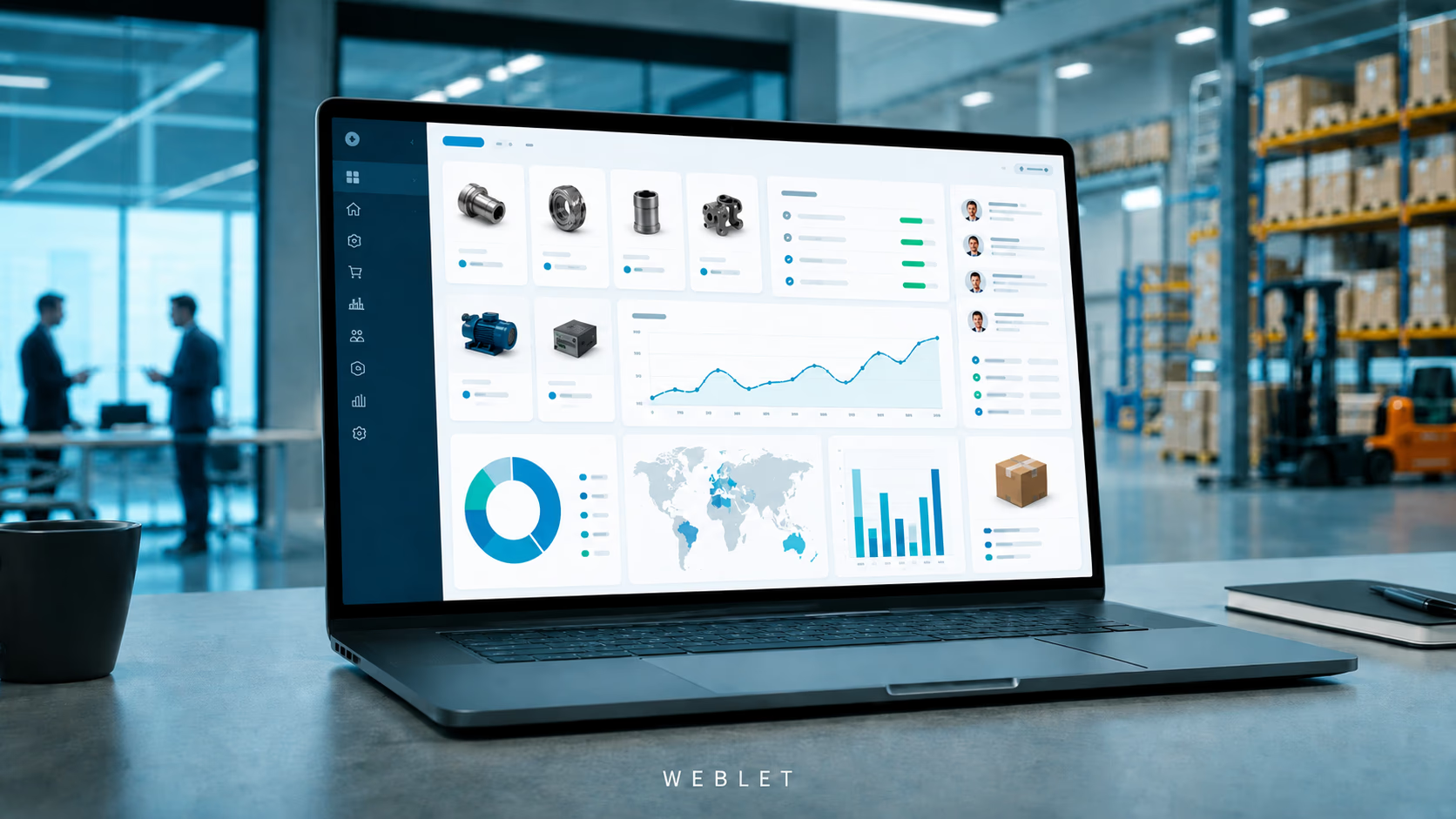
ERP system integration across the warehouse and distribution lets you pass orders, statuses, and execution data without typing the same information again. Each type of data has one authoritative source, which reduces mismatches.
For a fuller explanation of professional terms such as route optimization and artificial intelligence in logistics, use the WEBLET professional glossary.
2. How do you reduce transportation and distribution costs?
Efficient route planning is not only choosing the shortest road. It takes account of delivery windows, vehicle capacity, driving and unloading time, and driver availability.
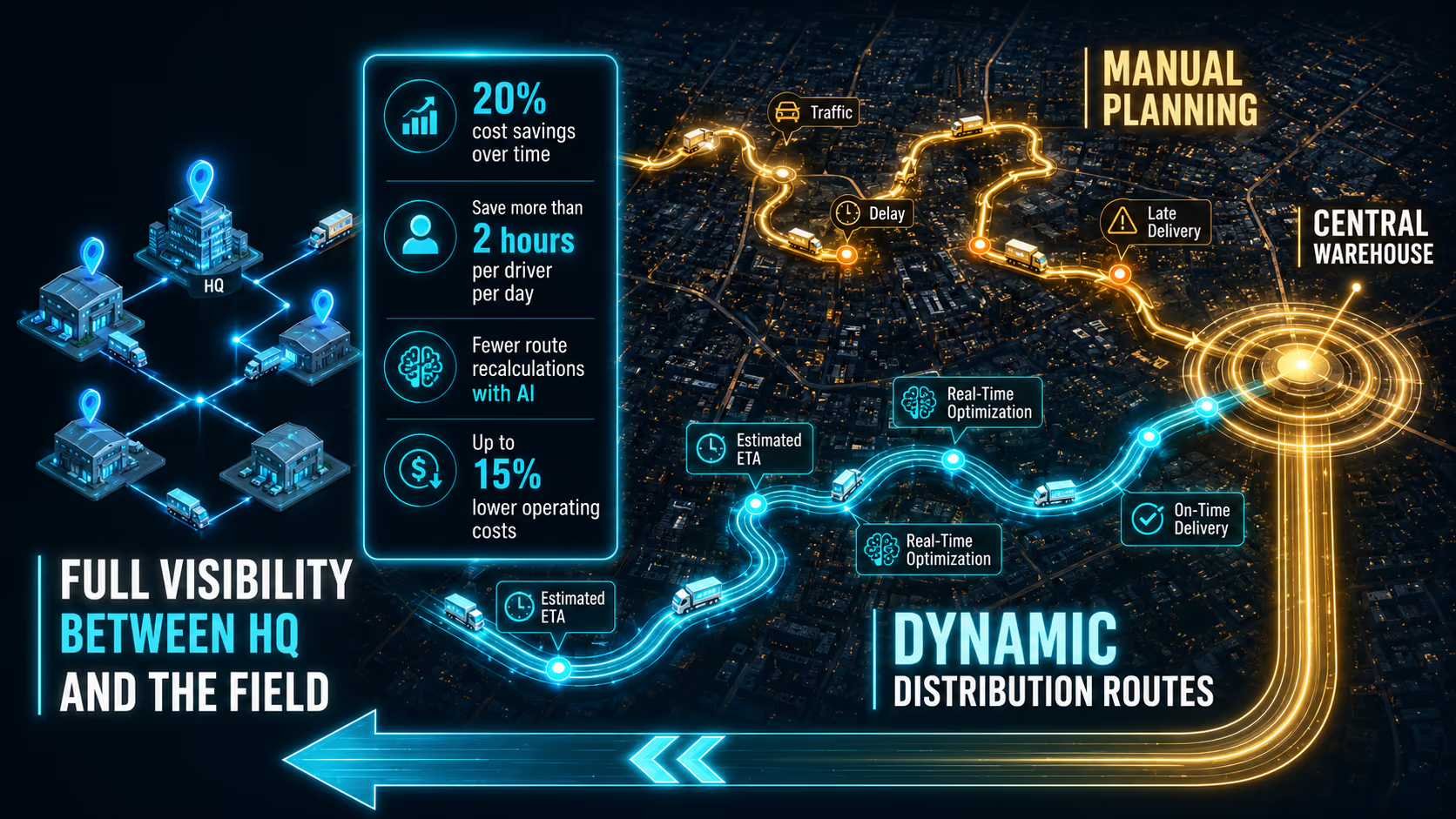
A TMS for distribution management and route optimization can combine delivery windows, vehicle capacity, and operational constraints into a more efficient work plan. When planning is connected to execution in the field, you can also respond to changes during the day.
3. How do you prevent shortages of inventory and equipment?
Inventory management does not end in the warehouse. Equipment on technicians' and installers' vehicles also affects whether jobs get finished.
Imagine a company that installs screens in hotels and stores. An installer arrives on site and finds that the right bracket is missing. He has to go back to the warehouse, and the next customer waits.
When information about the tasks and the equipment on the crews' vehicles is available and aligned, you can prepare better and cut return trips. That way you know before leaving which bracket is missing from the vehicle, and you complete it from the warehouse that same morning, before the installer arrives on site.
4. How does AI help with demand forecasting?
Demand forecasting analyzes past data, seasonality, orders, and trends in order to estimate future needs.
Artificial intelligence models can identify patterns and help plan purchasing, inventory, and distribution resources. A good forecast lets the organization prepare for peaks instead of reacting at the last moment.
5. How do you improve collaboration with suppliers?
Suppliers are an integral part of the chain. A delay in one component can hold up many orders.
Sharing forecasts, coordinating delivery dates, and giving early notice of changes let suppliers and the organization prepare together and solve problems before they reach the customer.
6. What do you do when the supply chain is disrupted?
Port delays, shortages of raw materials, transport failures, and security events can disrupt work plans.
Sound preparation starts with identifying the main risks, defining alternatives, and assigning clear responsibility for handling each scenario.
7. How do headquarters and the field see the same status?
When drivers, dispatchers, and customer service work from different statuses, every inquiry becomes a chain of phone calls.
Field apps connected to a central system can pass updates, locations, and exceptions. The dispatch desk can then see task status and handle changes without interrupting the driver for every question.
8. In which processes do AI and automation save work?
Automation can move information and run processes without repeated data entry. AI adds analysis, forecasting, and optimization.
In distribution and service, these technologies can be used in route planning, task assignment, exception detection, and resource allocation. The article on AI-based distribution route planning explains why manual planning struggles with changes during the delivery day.
Supply chain optimization improves processes along the whole chain, while route optimization focuses mainly on planning movement and distribution.
9. How do you prove what was actually delivered?
Digital proof of delivery (POD) records signatures, photos, quantities delivered, and exceptions directly from the field.
The information is passed to the organization's systems according to the existing connection, so you can check what was actually delivered, handle shortages, and reduce delays in service and billing.
10. How do you keep the improvement going over time?
Supply chain efficiency is not a one-off project. Customers change, orders are added, and work processes evolve.
It is worth reviewing failure points regularly, listening to warehouse and field staff, and gradually improving whatever creates delays and unnecessary work.
11. Does technology replace people?
Good technology does not replace human experience. It makes it possible to use that experience better.
Instead of spending time on phone calls, coordination, and searching for information, managers and dispatchers can focus on exceptions and decisions.
Implementation also needs attention. Training, process adjustments, and a trial period are part of making the change succeed.
12. What can you do this week?
Pick one operating day and follow an order from the moment it is received until it is delivered.
Check where waiting occurred, which data was typed twice, how many inquiries were needed, and which changes did not reach the right person in time.
Sometimes that map reveals improvement opportunities that no single department could see on its own.
Managing a supply chain?
Leave us a WhatsApp message and we'll get back to you with an initial fit check.
13. How does WEBLET fit into the supply chain?
WEBLET connects distribution planning, field execution, and enterprise systems through smart optimization, AI, and automation.
The platform manages distribution routes, drivers, technicians, installers, service calls, and proof of delivery, together with tracking of execution and exceptions.
The field apps also support work without a network connection, with data syncing once connectivity returns.
Through ERP and CRM integration, information from the field returns to headquarters and keeps planning and execution in one operational flow.
14. In summary: it all starts with shared information
An efficient supply chain is not only a chain in which every department works faster. It is a chain in which everyone works together, on coordinated and current information.
When systems, processes, and people are connected, you can cut waste, respond faster, and provide better service.